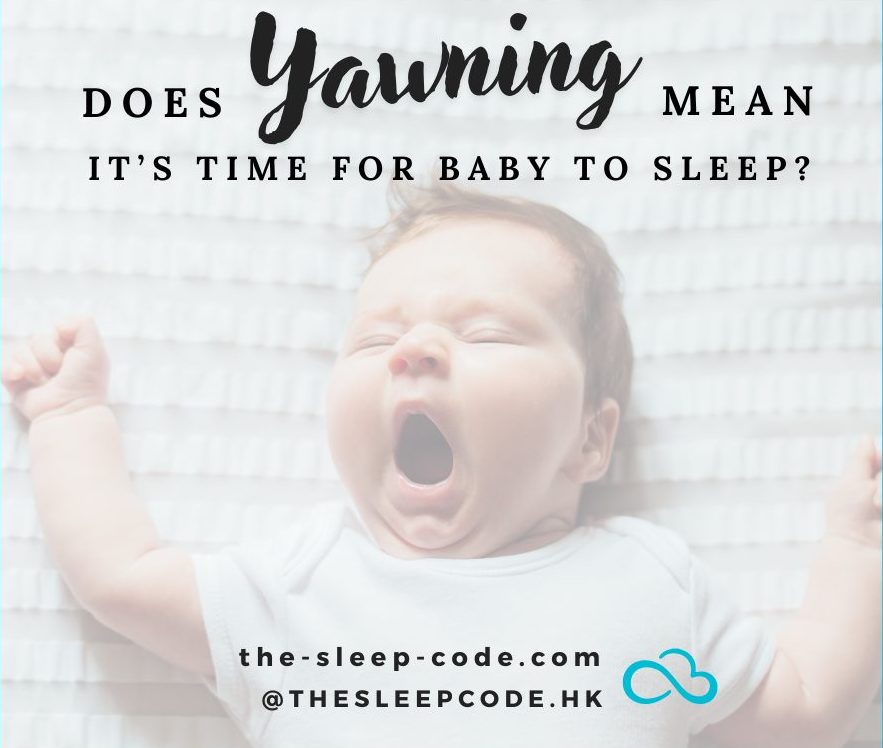
As new parents, you are told to look out for ‘sleepy cues’ and put your baby down for sleep before they get overtired.
Yawning. Eye rubbing. 7-mile stare. Loss of interest in activity. Red eyebrows. Fussiness…
Newborn sleepy cues can be quite helpful, but once your baby reaches 3-4 months and beyond, sleepy cues alone may not be the most reliable indicator to determine sleep time.
Here are some other reasons why your baby may be yawning:
- Overstimulation. Yawning in the first few weeks or months can be a way of regulation when a young infant is exposed to lots of noises, touches and experiences all at once.
- Boredom. Have you ever sat through a boring lecture or a stuffy meeting? Yes, babies yawn out of boredom too.
- Yawning helps stretch babies’ face, jaw and throat muscles. This may happen more frequently during developmental phases as they learn to make new sounds or prepare for the introduction of solids.
Now let’s consider two very different scenarios where your baby is yawning, and what they actually need.
Scenario 1: If your baby looks tired all the time and…
they are up multiple times a night and catnaps through the day,
They are probably truly exhausted from not getting consolidated, restorative sleep.
The problem with putting them to bed by watching tired signs alone, is that it may perpetuate those catnapping + broken sleep cycles. For these babies, what they need is:
a tailored schedule that works with their sleep biology
+
help in consolidating their sleep to get the truly restorative sleep they need.
Scenario 2: If your baby looks tired all the time…
despite having consolidated night sleep and appropriate day naps.
Observe whether there is any consistent snoring or opened mouth during their sleep.
Pediatric sleep disordered breathing can hugely impact the quality of sleep a child is getting. This can often show up behaviorally such as acting hyper or not paying attention. For these babies, the first step is to:
check in with a pediatric ENT and airway-focused specialist to rule out any underlying sleep-related breathing disorders.
Hi I’m Lydia, certified adult and pediatric sleep therapist, and trained specialist in CBT-i. Follow me on IG @thesleepcode.hk for more sleep resources, and if you have specific questions about your baby, feel free to contact me at the-sleep-code.com/contact.
 The Sleep Code | Sleep Specialist in Hong Kong