Do you use a night light for your toddler? Turns out it may actually keep your child awake rather than aid sleep, according to a recent study published in 2022.
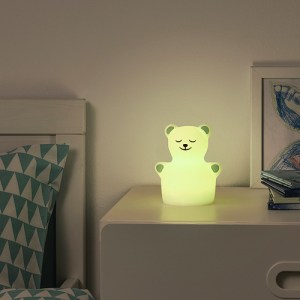
The study measures melatonin levels in children between age 3-5 and goes on to show that even dim lighting can affect children’s melatonin levels before bedtime, thus makes it harder for them to feel sleepy or fall asleep.
This study is one of the first to indicate how preschool-aged children are highly sensitive to light exposure in the hour before bedtime, which may impact their natural circadian rhythms. One reason the study suggests, may be that young children’s pupils are larger and clearer than those of adults, which lets light into their eyes more easily.
So how exactly can we make use of LIGHTING to reduce bedtime battles?
- Refrain from using screens or devices two hours before bed, as blue light in the evening is the most disruptive to sleep.
- Start dimming the lights in the house in the one hour leading up to your child’s bedtime.
- Choose a warm hue lighting for the bathroom, for teeth brushing and potty time before bed.
- If your child is older than 3 years old and has been explicitly requesting for a night light, choose one with a warmer hue such as red or orange light. Adjust to its dimmest setting, or find ways to block it out partially to reduce light intensity in the bedroom.
——
Hi I’m Lydia, certified sleep therapist and trained specialist in CBT for insomnia. Follow me on IG @thesleepcode.hk or visit the-sleep-code.com for more sleep resources.
Personalised sleep coaching for adult insomniacs: the-sleep-code.com/adultsleep/
For baby and toddler sleep coaching: the-sleep-code.com/pediatricsleep/
For sleep talks and corporate wellness: the-sleep-code.com/corporate/
References:
https://pubmed.ncbi.nlm.nih.gov/34997782/
https://www.sleepfoundation.org/sleep-news/night-lights-affect-childrens-sleep
 The Sleep Code | Sleep Specialist in Hong Kong